

Introduction
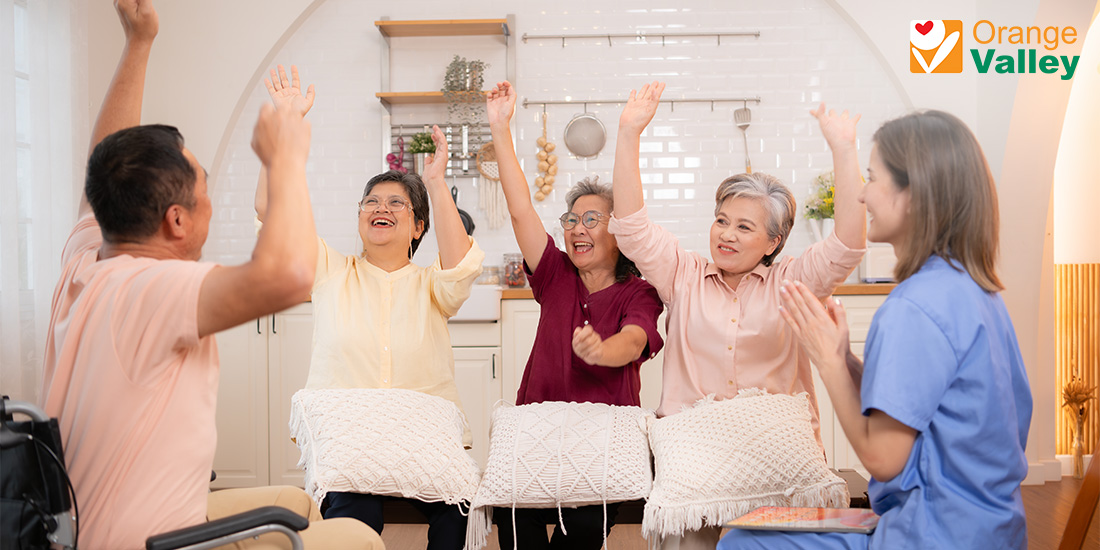
As people grow older, small changes in movement, memory, and attention often become part of daily life. These shifts can shape how seniors experience each day, from their sense of comfort and confidence to how they connect with the people and spaces around them. In a nursing home setting, thoughtful, consistent support helps seniors feel safe, understood, and cared for.
Non-pharmacological interventions centre on everyday practices that support well-being without relying only on medication. Instead of focusing on symptoms in isolation, these approaches look at the person as a whole. Gentle movement, familiar routines, meaningful interaction, and sensory comfort all play a part in creating a day that feels steady and reassuring.
When woven into daily nursing home routines, non-pharmacological interventions support physical ease, encourage participation, and help maintain emotional balance. Simple activities, predictable schedules, and calm communication can make daily life feel more settled and familiar, particularly for seniors adjusting to changes in mobility, memory, or mood.
In Singapore, selected Traditional Chinese Medicine (TCM) practices such as acupuncture and tuina may also be introduced thoughtfully by registered practitioners, depending on individual needs and tolerance. These approaches are used as supportive options and are carefully aligned with each resident’s overall care plan.
At Orange Valley, care is guided by the belief that well-being extends beyond clinical treatment alone. By incorporating evidence-informed, non-medication-based approaches into daily life, residents are supported in ways that respect their comfort, personal preferences, and natural rhythms. This care philosophy places compassion, attentiveness, and everyday ease at the heart of the living environment.
Key Takeaways:
- Non-pharmacological interventions support seniors through gentle movement, meaningful engagement, and familiar routines that enhance daily comfort and emotional ease alongside medical care.
- These approaches help seniors stay connected, supported, and involved in everyday life, respecting individual abilities, preferences, and personal history.
- When thoughtfully integrated into nursing home care, non-medication-based practices foster a calm, stable environment where seniors feel settled, valued, and cared for each day.
Understanding Non-pharmacological Interventions
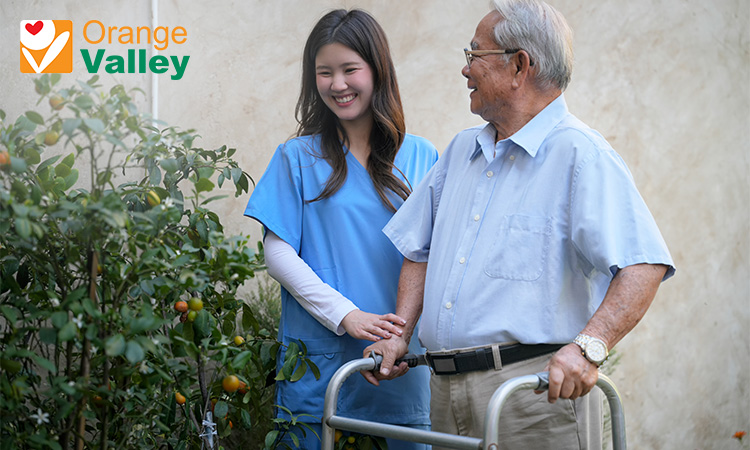
Non-pharmacological interventions focus on how seniors experience each day, not just on managing specific conditions. They take into account how older adults move, think, connect, and feel, recognising that comfort, familiarity, and meaningful engagement shape overall well-being.
In nursing home settings, these approaches are thoughtfully integrated into daily routines. Through gentle support, consistent structure, and everyday interaction, residents are encouraged to feel settled, supported, and connected to the people and environment around them.
How These Interventions Support Seniors in Daily Life
Non-pharmacological interventions support seniors by addressing physical, cognitive, emotional, and social needs in ways that feel familiar and manageable. Rather than introducing sudden changes, these approaches build on small, consistent actions that shape daily comfort and confidence, supporting both daily comfort and emotional well-being in a reassuring manner.
Physical support often forms the foundation of this approach. Gentle movement, assisted exercises, and posture support help seniors feel more at ease in their bodies as they go about the day. By encouraging safe movement and flexibility, these practices reduce stiffness and help residents move comfortably, even when mobility is limited.
As physical comfort improves, seniors are often able to engage mentally. Cognitive activities such as conversation, reading, music, and simple memory exercises provide moments of focus and purpose. These interactions help seniors stay connected to their surroundings and contribute to a sense of presence in daily life.
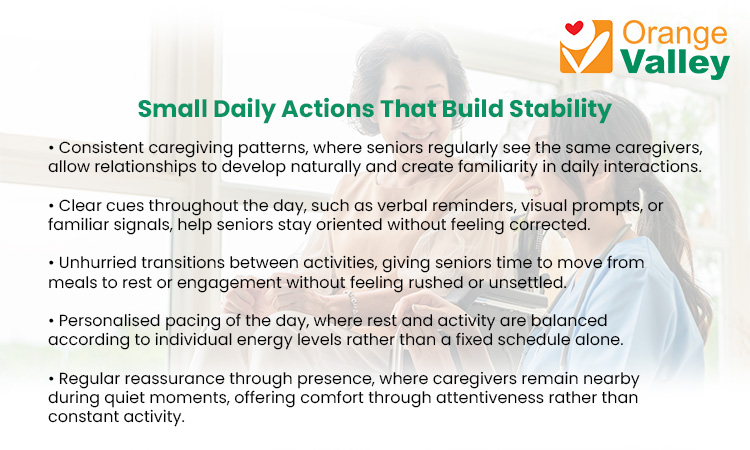
Alongside physical and cognitive support, behavioural strategies help create a calm and predictable environment. Clear routines, patient communication, and familiar settings offer reassurance, particularly during moments of uncertainty or emotional change. This sense of predictability helps seniors feel secure and supported throughout the day.
Social connection then naturally grows within this steady framework. Shared meals, group activities, and informal interactions bring warmth into everyday routines, reinforcing a sense of belonging and community. Feeling included and seen often has a positive influence on mood and engagement.
Sensory-based experiences tie these elements together. Familiar music, comforting objects, and soothing sensory cues help seniors feel grounded, especially during quieter moments or transitions. Taken together, these approaches show how non-pharmacological interventions support daily living through care that flows naturally, feels respectful, and centres on the person rather than the condition.
Why Nursing Homes Use These Approaches Alongside Medical Care
Medical care remains an important part of supporting seniors, yet daily comfort and well-being are shaped by much more than medication alone. How a senior feels throughout the day, how easily they move, and how connected they feel to others all play a meaningful role in their overall experience. Non-pharmacological interventions work alongside medical treatment by addressing these everyday aspects of care in a thoughtful and supportive way.
When structured routines, gentle activity, and meaningful engagement are part of daily life, seniors often feel more settled in their environment. These approaches support emotional balance and encourage participation, which can be especially helpful for seniors living with long-term conditions or cognitive changes. Small, consistent moments of engagement can make each day feel more familiar and reassuring.
By focusing on movement, connection, and routine, care teams are able to support stability and comfort in ways that feel natural rather than imposed. Seniors are encouraged to stay involved at their own pace, allowing daily life to unfold in a way that respects individual abilities and preferences.
Families often value care approaches that honour personal preferences, cultural background, and everyday comfort, not just clinical needs. Within elderly nursing homes in Singapore, non-pharmacological interventions are increasingly recognised as an essential part of person-centred care that supports both physical well-being and emotional ease.

Key Non-pharmacological Interventions Used in Nursing Homes
Non-pharmacological interventions are integrated into daily routines in ways that feel natural and easy to follow. Each approach is adapted to individual needs, allowing seniors to take part at a pace that feels comfortable and familiar.
Together, these non-pharmacological interventions support movement, connection, and emotional ease, shaping a daily environment where seniors can feel settled and supported.
A. Physical and Mobility Support
Physical support helps seniors move through their day with greater comfort and confidence. As part of non-pharmacological interventions, physiotherapy focuses on maintaining strength, balance, and steady movement in a way that feels manageable.
This is supported by range-of-motion exercises, which keep joints flexible and reduce stiffness, especially for those who spend longer periods seated or resting. Short, supervised walking sessions also encourage circulation and reinforce daily routines, helping seniors stay connected to their surroundings.
For those who need assistance, proper positioning and safe transfers support alignment and reduce strain during movement. Simple exercises such as chair stretches or guided limb movements encourage participation without fatigue. When combined with well-planned meals, these non-pharmacological interventions help maintain comfort and reinforce a sense of normalcy within senior care centres.
B. Cognitive, Social, and Emotional Support
Cognitive and emotional support focuses on helping seniors feel connected and understood. As part of non-pharmacological interventions, reminiscence activities using music, photographs, or familiar items encourage meaningful interaction and shared memories.
Cognitive stimulation through reading, puzzles, or small group activities supports attention and engagement in a relaxed setting. At the same time, validation-based communication helps caregivers respond with empathy, creating a sense of reassurance and trust.
Social interaction builds naturally within this environment. Activities such as crafts, music, or small group gatherings create opportunities for connection without pressure. Community outings and volunteer interactions add variety, helping seniors stay engaged beyond daily routines.
Together, these non-pharmacological interventions support emotional stability and a sense of belonging within a centre for seniors that values connection and presence.
C. TCM-based Interventions in a Regulated Care Environment
TCM may be included as part of non-pharmacological interventions when aligned with regulatory guidelines and individual care plans. In Singapore, only registered practitioners provide these services within nursing homes, ensuring proper coordination with care teams.
Acupuncture may be considered to support comfort or relaxation for some seniors, following a careful assessment. Tuina techniques are adapted for older adults, using controlled movements to support circulation and ease stiffness in a comfortable way.
Herbal support is approached with care, especially for seniors managing multiple medications. Any use is reviewed against the individual’s health profile to ensure suitability.
Within nursing home settings, these remain supportive options used alongside medical care. As part of non-pharmacological interventions, they are included only when appropriate, including in nursing homes with dementia programmes where coordination and oversight are especially important.
Questions You Might Have
1. Can these approaches replace medication?
These approaches are not intended to replace prescribed medication. Instead, they work alongside medical treatment to support comfort, behaviour, and daily functioning. Medication continues to play an important role when clinical management is required, while non-pharmacological interventions support everyday care and well-being.
2. Is acupuncture safe for older adults?
Acupuncture may be suitable for some seniors when it is provided by registered practitioners. Whether it is appropriate depends on individual health history, existing conditions, and current medication use. A careful assessment is always carried out before any treatment is considered.
3. What can be offered for seniors who are bedbound?
Seniors who are bedbound can still receive thoughtful, gentle support. This may include light physiotherapy, range-of-motion exercises to maintain comfort, and adapted tuina techniques when appropriate. Sensory activities such as familiar music, meaningful objects, and calm conversation also help support engagement and emotional ease.
4. Do these approaches help seniors with dementia?
Many non-pharmacological interventions are commonly used to support daily stability for seniors living with dementia. Predictable routines offer reassurance, while reminiscence activities elicit familiar, comforting responses. Validation-based communication and sensory engagement further help support emotional regulation and a sense of calm.
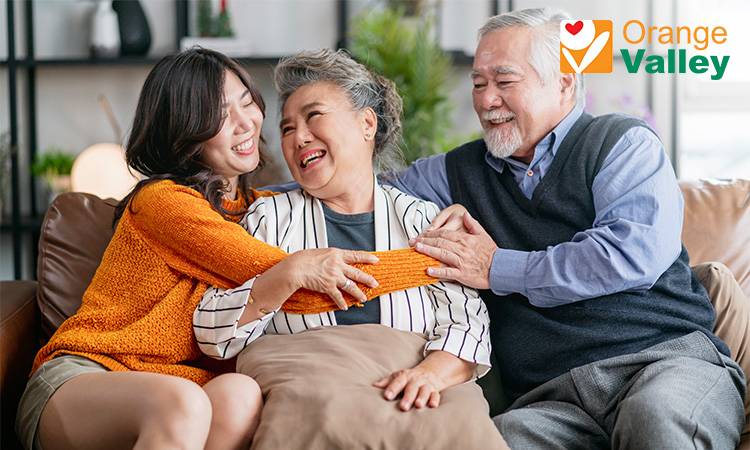
Supporting Comfort and Well-Being Through Everyday Care
Non-pharmacological interventions offer support that helps seniors feel comfortable, engaged, and emotionally at ease within a nursing home environment. By focusing on movement, connection, routine, and familiarity, these approaches support daily well-being in ways that feel natural, respectful, and grounded in evidence-informed practices.
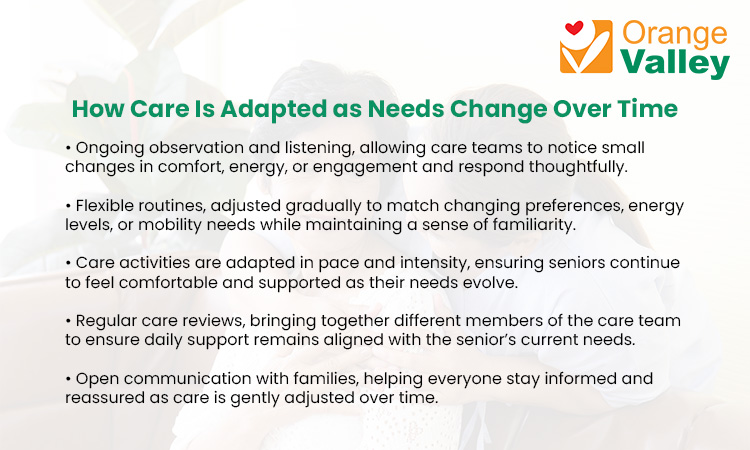
When thoughtfully integrated into care, they help residents remain involved in everyday life, maintain meaningful relationships, and experience a sense of stability within their surroundings. Used alongside medical care, these approaches contribute to a balanced care experience that supports both physical comfort and emotional reassurance.
At Orange Valley, care is shaped around each resident’s individual needs, preferences, and daily rhythms. We also understand that families often need clarity around practical considerations, including eligibility and options related to nursing home subsidies in Singapore, as part of their care planning journey.
If you are exploring care options for a loved one and would like to understand how non-pharmacological interventions fit into daily life at Orange Valley, our team is here to help. Reach out to us to learn more about our approach and how we can support your family with clarity, warmth, and care.